Keynote Speakers
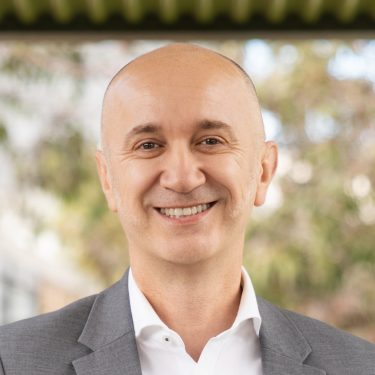
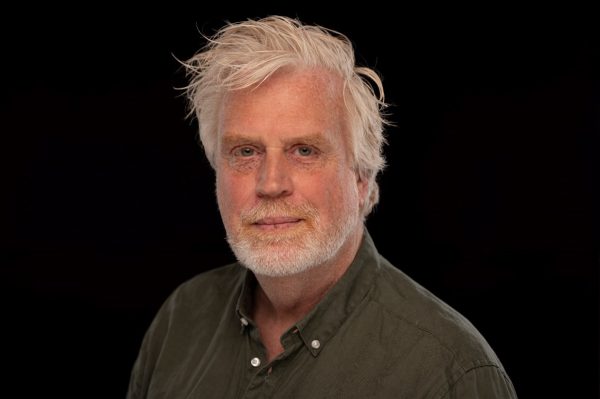
Professor Wilfried Admiraal (Oslo Metropolitan University, Norway)
Rethinking pedagogies of engagement with learning analytics
In recent years, the landscape of available technology for education has expanded, with the most influential example being the use of Artificial Intelligence in education. These tools hold the potential to transform education by making learning experiences more interactive, personalized, and responsive to individual student needs. However, despite their growing availability, the pedagogical approaches employed in many educational settings have not evolved at the same pace. This disconnect presents a critical challenge: how can we redesign pedagogies to make meaningful and effective use of the digital tools now at our disposal? This presentation will go into how learning analytics can inform pedagogies, with a focus on students’ cognitive, behavioural, emotional and social engagement with learning.
Bio:
Wilfried Admiraal is a social psychologist and full professor at the Centre for the Study of Professions of Oslo Metropolitan University in Norway. His research interests include teaching, teachers, and technology. His research interests combine the areas of teaching, technology, and social psychology in secondary and higher education. Current projects relate to simulations and virtual reality in higher education, learner engagement and interaction in online learning, and students’ and teachers’ scientific literacy. More information on projects, boards, PhD supervision, and publications can be found on his personal homepage: https://sites.google.com/site/wilfriedadmiraal/.
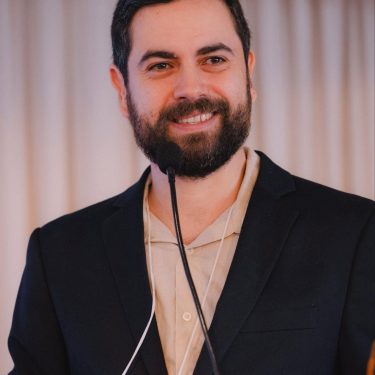
Q. Vera Liao (University of Michigan, United States)

Revisiting Intelligence Augmentation: Investigating and Mitigating the Risks of AI to Human Intelligence
Powerful AI technologies, especially recently developed large language models, are increasingly mediating or even replacing human thinking, from information and knowledge acquisition, judgment and decision making, creativity, to our understanding of the world. In 1962, Douglas Engelbart described a vision of Intelligence Augmentation (IA), in which machines should augment, instead of replacing, human thinking processes. In this talk, I will revisit this vision and pose the question: Are we moving away from IA with increasingly capable and agentic AI? Drawing on human-computer interaction research, including our own work, I will examine two interconnected threats. First, I will present findings from research that studies and mitigates people’s overreliance on AI, highlighting fundamental obstacles to maintaining human oversight of AI and arguing that a productivity-oriented approach to AI development and use structurally worsens these obstacles. I will then discuss our recent work studying how new affordances of LLMs threaten the integrity of information and knowledge acquisition, and situate this discussion in broader empirical research that has identified how AI is reshaping human cognition. I will close the talk with reflections on what intelligence augmentation actually requires, and how these requirements might be embedded in the technical objectives of AI and the sociotechnical infrastructures through which AI is deployed.