
2026 SoLAR Executive Committee Nominees
January 15, 2026
The successful candidates of the election will join the current 2026 SoLAR Executive Committee:
President - Blaženka Divjak, University of Zagreb, Croatia
Vice President: Mohammad Khalil, University of Bergen, Norway
Member at Large - Kathryn Bartimote, University of Sydney, Australia
Member at Large - Guanliang Chen, Monash University, Australia
Member at Large - Catherine Manly, Fairleigh Dickinson University, USA
Member at Large - Mladen Raković, Monash University, Australia
Member at Large - Andrew Zamecnik, University of South Australia, Australia
MEMBER AT LARGE NOMINEES
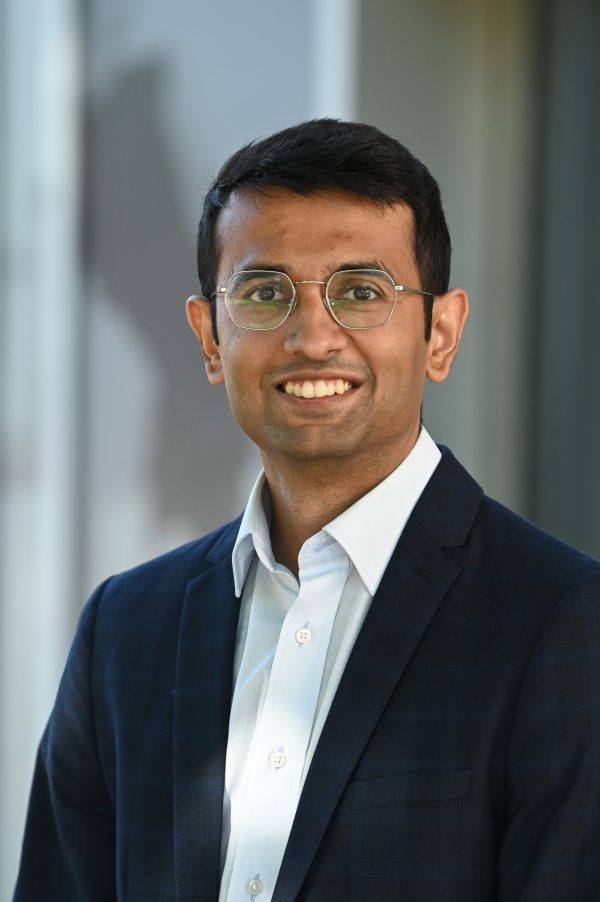 Abhinava Barthakur, Australia
Adelaide University
Interest in Learning Analytics (Research Area, etc.) & Interest in serving on the SoLAR Executive Committee: Dr Barthakur’s interest in Learning Analytics is grounded in its potential to make learning more transparent, equitable, and improvable, when analytics and AI are designed with learners and educators and guided by strong ethical foundations. He has translated this commitment into sustained service to SoLAR and the broader community. Within SoLAR, he serves as Treasurer and co-chair of the Early Career Researchers (ECR) Working Group, overseeing finances and coordinating annual support that enables ECRs to advance research projects. He also serves as liaison between the Journal of Learning Analytics (JLA) editors and the SoLAR Executive, contributing to governance and long-term sustainability planning. In the past, he has supported LAK on multiple occasions, serving as Proceedings Chair (2022, 2023) and Workshop Chair (2025), and in 2025 led a society-wide consultation, drawing input from more than 5000 members, on publication decisions for LAK proceedings.
If re-elected, he will champion a clear, member-informed sustainability pathway for JLA, including stable resourcing, transparent editorial governance, and stronger alignment between journal strategy and society priorities. He will expand ECR support through targeted micro-grants, mentoring and leadership pathways, and opportunities for service roles that build capacity across regions. More broadly, he will help grow SoLAR by strengthening member engagement, deepening partnerships with educators and practitioners, and amplifying the society’s global visibility and impact.
Biography: Dr Abhinava Barthakur is a Senior Research Fellow at Adelaide University and affiliated with the Centre for Change and Complexity in Learning. He completed his PhD in 2023 in learning analytics from the University of South Australia. His research focuses on human-centred assessment models underpinned by LA and AI in education, with a strong methodological foundation in data science and psychometrics. From the outset of his career, he has leveraged technology to capture and support the development of complex learner competencies in higher education. He has established a well-established track record of research achievements and extensive industry engagement, positioning him as an emerging leader who significantly contributes to advancing educational practice through evidence-informed technological innovation. This is evident from his high volume and quality of publications (e.g., Nature), his guidance of doctoral researchers, a normalized citation impact of 1.76 (Web of Science), and over $1.8M in funding, relative to his career stage.
Working Group Interests: Early Career Research Grant Working Group & Journal for Learning Analytics
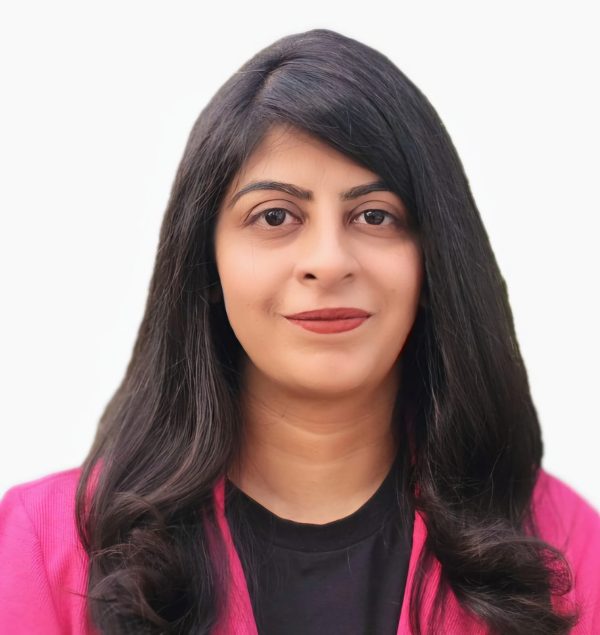 Rhythm Bhatia, Finland
University of Eastern Finland
Interest in Learning Analytics (Research Area, etc.) & Interest in serving on the SoLAR Executive Committee:
My interest in learning analytics lies in advancing learner-centered, ethically grounded, and impact-oriented research that bridges methodological rigor with real educational practice. My research focuses on person-based and longitudinal learning analytics, self-regulated learning, and translating complex learner data into actionable insights for educators, institutions, and learners. I work extensively with sequence analysis, clustering, and mixed-method approaches to move beyond static performance metrics toward understanding learning processes over time.
Alongside research, teaching plays a central role in my engagement with learning analytics. As external faculty at DHBW (Germany), I teach AI, data science, and mathematical foundations, integrating learning analytics concepts into curriculum design, assessment, and feedback practices. I am particularly interested in how learning analytics can support instructional decision-making and professional development for educators.
As an entrepreneur and co-founder of an AI consultancy and EdTech ventures, I actively collaborate with schools, universities, and industry partners to deploy learning analytics systems at scale while ensuring pedagogical validity and responsible AI use. Serving on the SoLAR Executive Committee particularly within Industry & Partnerships and the Education Working Group would allow me to strengthen academia–industry collaboration, support practitioner-facing initiatives, and contribute to capacity-building, teaching resources, and global outreach within the SoLAR community.
Biography:
Rhythm Bhatia is an AI researcher, educator, and entrepreneur working at the intersection of learning analytics, educational data science, and responsible AI for education. She is a PhD candidate at the University of Eastern Finland, where her research focuses on moving from big-data approaches toward person-centered learning analytics, with particular emphasis on self-regulated learning, longitudinal student trajectories, and actionable insights for educators.
Rhythm has published in leading venues , and her current work examines how sequence analysis and clustering can uncover meaningful learner pathways beyond grades. Alongside her academic work, she is the co-founder and CTO of ICONFLYERTECH and leads AI-driven EdTech initiatives that translate research into scalable, ethical educational tools for schools and universities.
She serves as external faculty at DHBW (Germany), teaching AI, data science, and mathematical foundations, and has mentored students through programs such as Google Summer of Code and Women in Music Information Retrieval. Rhythm is also actively involved in international academic and professional communities, including serving in leadership roles connecting India and Europe.
Through SoLAR, she aims to strengthen global collaboration, support early-career researchers, and advance learner-centered, methodologically rigorous learning analytics research.
Working Group Interests: Industry and Partnerships, Education Working Group
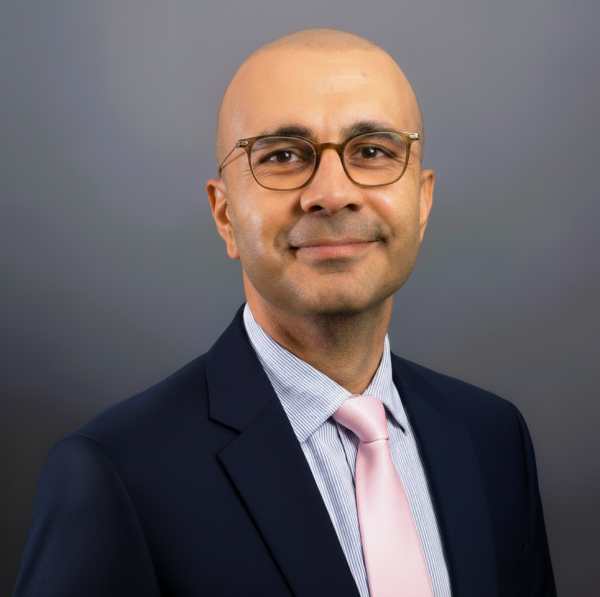 Okan Bulut, Canada
University of Alberta
Interest in Learning Analytics (Research Area, etc.) & Interest in serving on the SoLAR Executive Committee:
As a university professor and researcher with a consistent presence at the LAK Conference, I have witnessed the evolution of learning analytics into a cornerstone of modern pedagogy. My research is dedicated to the intersection of assessment analytics and adaptive intelligent systems, specifically exploring how platforms can dynamically respond to a learner’s cognitive style and performance trajectory within higher education. This work seeks to bridge the gap between complex data and actionable, personalized learning environments.
I am eager to transition into a more strategic role on the SoLAR Executive Committee to further the society’s global impact. Throughout my career, I have cultivated deep collaborative ties with leading institutions across North America, Europe, and Australia, providing me with a unique vantage point on the diverse challenges facing our international community. If elected, I intend to leverage these networks to champion SoLAR’s mission and, crucially, to establish stronger alliances with the educational measurement and psychometrics communities. By fostering this cross-disciplinary dialogue, I aim to enhance the methodological rigor of our field and ensure SoLAR remains the preeminent global hub for innovation in learning sciences.
Biography: Okan Bulut is a Professor in the Measurement, Evaluation, and Data Science program and a researcher at the Centre for Research in Applied Measurement and Evaluation at the University of Alberta. He teaches courses on computational psychometrics, machine learning, and statistical modeling. Dr. Bulut's research interests lie at the intersection of artificial intelligence (AI), educational data mining, and learning analytics. Through the utilization of AI-driven algorithms and natural language processing, he seeks to create intelligent systems that can dynamically adapt to learner preferences, cognitive styles, and performance trajectories.
Working Group Interests: I am interested in becoming a member of the following group(s): 1) Education Working Group 2) Communications Working Group
 Elizabeth Cloude, USA
Michigan State University
Interest in Learning Analytics (Research Area, etc.) & Interest in serving on the SoLAR Executive Committee: My interest in learning analytics centers on using mixed, multimodal and process-oriented data to model self-regulated learning processes, specifically motivation and emotion in real time, with the goal of informing adaptive, intelligent, and equitable learning environments. I am particularly interested in how analytics can support personalized feedback and promote student agency in technology-enhanced learning contexts. Serving on the SoLAR Executive Committee would allow me to contribute to shaping the future of learning analytics by promoting research that bridges learning theory and practice. I am committed to supporting initiatives that advance ethical and inclusive use of analytics, foster interdisciplinary collaboration, and strengthen connections between researchers, educators, and developers. I see this role as an opportunity to help guide strategic priorities for the field and to amplify diverse perspectives within the SoLAR community.
Biography: I am an Assistant Professor in the Department of Counseling, Educational Psychology and Special Educational at Michigan State University. I am a faculty member in the Educational psychology and educational technology PhD program. My research focuses on the intersection of instructional design, self-regualted learning, and multimodal learning analytics, with a particular emphasis on game-based learning environments and adaptive learning technologies. I hold a Ph.D. in Learning Sciences and have experience leading interdisciplinary projects that integrate mixed multimodal data sources, such as logfiles, concurrent think-/emote-aloud protocols, eye movements, and facial expressions, to better understand learner-centered processes and regulation. My work has been supported by competitive fellowships and has resulted in multiple publications and conference presentations in learning analytics and educational technology communities. I am passionate about advancing equitable and learner-centered approaches to analytics and fostering collaboration across research and practice.
Working Group Interests: 1. Multimodal Learning Analytics Across Spaces (CrossMMLA SIG) 2. Methodology in Learning Analytics (MLA) SIG
 Jionghao Lin, Hong Kong
The University of Hong Kong
Interest in Learning Analytics (Research Area, etc.) & Interest in serving on the SoLAR Executive Committee:
My research interests in learning analytics focus on applying the computational methods to analyze the teacher-student interaction process (e.g., verbal communication, body gesture, and emotion) and further demonstrate the insights contributing to the pedagogical theory and practice.
I am interested in serving on the SoLAR Executive Committee because SoLAR is uniquely positioned to connect methodological advances with community standards, practitioner adoption, and responsible innovation. On the Executive Committee, I would contribute to initiatives that strengthen reproducibility and ethics, broaden participation in Asia-Pacific, and create clearer pathways from LA research to sustainable impact in education.
Biography: Dr. Jionghao Lin is an Assistant Professor at the University of Hong Kong. He earned his Ph.D. in Computer Science from Monash University and completed postdoctoral research at Carnegie Mellon University. His research lies at the intersection of learning analytics, artificial intelligence in education, and human-centered computing, with a particular focus on designing AI-driven systems to enhance teaching, learning, and assessment. Dr. Lin has led and contributed to projects on multimodal feedback generation, educational dialogue analysis, and AI-assisted tutor training. His work has been recognized with multiple awards, including Best Paper Award at HCII 2024, Best Student Paper Award at EDM 2024, Best Paper Award at ICMI 2019, and Best Demo Award at AIED 2023. He is also deeply engaged in the international AIED community, serving as Technology and Outreach Officer for the International AIED Society. In addition, he contributes as a reviewer for leading journals such as IJAIED, IEEE TLT, and BJET, and serves on the program committees of major conferences including AIED, LAK, EDM, and ECTEL.
Working Group Interests: Communications Working Group and Events Working Group
 Logan Paul, USA
Indiana University Bloomington
Interest in Learning Analytics (Research Area, etc.) & Interest in serving on the SoLAR Executive Committee:
My interest in learning analytics centers on its capacity to shape learning systems that are ethical, transparent, and actionable at scale. My research focuses on the design and governance of learning analytics infrastructures that integrate peer feedback, reflective data, and AI-supported scaffolding to support learning, instructional decision-making, and institutional insight. I am especially interested in how learning analytics can inform learning design, policy, and organizational practice—not merely measurement.
In parallel with my research, I have led learning analytics initiatives in large-enrollment and capstone learning environments, giving me direct experience navigating the intersection of innovation, ethics, and institutional governance. This practitioner-scholar perspective informs my commitment to responsible analytics and shared governance.
I am interested in serving on the SoLAR Executive Committee to help strengthen alignment between learning analytics research, practice, and leadership. I would contribute experience in academic governance, technology policy, and community-building to support SoLAR’s mission and LAK’s role in advancing rigorous, inclusive, and impactful learning analytics scholarship as the field continues to mature.
Biography:
Logan Paul is a faculty member in Informatics at Indiana University whose work centers on learning analytics, AI-informed decision-making, and the governance of data-driven learning systems. His scholarship focuses on designing learning analytics that are transparent, ethical, and meaningfully actionable for learners, instructors, and institutions.
Logan’s learning analytics work spans large-enrollment and capstone learning environments, where he has advanced analytics-informed approaches to peer feedback, collaboration, and reflective learning at scale. He is particularly interested in how learning analytics can bridge research and practice while informing institutional policy, instructional design, and organizational decision-making.
At Indiana University, Logan serves in multiple academic leadership and governance roles related to technology policy, data use, and faculty practice. He brings experience navigating institutional structures to align analytics initiatives with shared governance, academic values, and long-term sustainability. Within SoLAR (and LAK), Logan seeks to advance community-driven scholarship, ethical analytics practice, and leadership that strengthens the connection between learning analytics research, policy, and impact.
Working Group Interests: Education, Events, and Inclusion
 Kingsley A. Reeves, Jr., PhD, USA
University of South Florida
Interest in Learning Analytics (Research Area, etc.) & Interest in serving on the SoLAR Executive Committee:
Years ago, I had an epiphany that while engineering has made an impact on many industry sectors (e.g., petroleum engineering, aerospace engineering, healthcare engineering, etc.), the engineering community has never focused its attention in a similar way on the education sector. In learning analytics research, I have discovered a research community that embraces much of what I envisioned education engineering could be and I am excited about it. With my new data science skills, I am looking forward to continuing my growth as a learning analytics research scholar.
My interest in serving on the SoLAR Executive Committee is twofold. First, I am interested in getting more directly involved in the learning analytic research community. Second, as an industrial engineer transitioning to applying data science approaches to the study of the education sector, my perspective may be valuable due to its uniqueness. I am interested in contributing to the future direction of a community I hope to be a member of for many years to come. I had the opportunity to do this at a different scale when I participated in the pre-conference workshop entitled “What are the Grand Challenges of Learning Analytics?” during LAK25, my first LAK conference.
Biography: I am an Associate Professor of Industrial and Management Systems Engineering at the University of South Florida in the middle of a career pivot. I am a passionate educator and have been involved in traditional engineering education work throughout my academic career but wanted to connect this passion with the use of more traditional industrial engineering research approaches. I secured an NSF Mid-Career Advancement grant, and, as part of my professional develop, it funded by enrollment in the Master of Applied Data Science degree program at the University of Michigan. I completed the program in August 2025. It was during my time in this program that I was introduced to both learning analytics research and SoLAR. I attended my first LAK conference last year and hope to attend this year’s conference. I am currently conducting research that involves natural language processing and group communication analysis and have a related proposal under review at NSF. I am also conducting research in my classroom that involves the analysis of student discourse to measure critical thinking. Though new to learning analytics, I am excited about becoming a more active member of the community. My outside perspective could prove valuable as an at-large member.
Working Group Interests: Membership Working Group
 Martin J. Tomasik, Switzerland
University of Zurich
Interest in Learning Analytics (Research Area, etc.) & Interest in serving on the SoLAR Executive Committee:
My interest in Learning Analytics sits at the intersection of rigorous research methods and substantive educational science. I work on psychometrics, longitudinal and continuous-time modelling, and machine learning approaches that help make sense of large-scale, sparse, and noisy educational data—exactly the kind of data that will become even more abundant as computer-based learning and assessment systems continue to grow.
I see Learning Analytics as an applied field where sophisticated methodology can have direct societal impact: improving learning opportunities, supporting adaptive teaching, and informing evidence-based educational decision-making. My current work includes the Zurich Learning Progress Study (LEAPS) and research on modelling computer-based formative assessment data (e.g., work on graph neural networks and vertical scaling), alongside applied projects such as AI-based language proficiency testing (Innosuisse, 2024–2026) and evaluation of high-stakes selection procedures.
I am interested in serving on the SoLAR Executive Committee because I want to help shape the field, strengthen connections between methodology, theory, and practice, and contribute to a community that is both scientifically ambitious and socially responsible.
Biography: Prof. Dr. phil. Dipl.-Psych. Martin J. Tomasik is Full Professor (ad personam) for Research Methods in Developmental and Educational Sciences at the University of Zurich. His research connects psychometrics, longitudinal modelling, and data science to better understand learning and development using large-scale educational assessments. In recent years, he has helped shape major Swiss education initiatives, including the Zurich Learning Progress Study (LEAPS, 2022–2028), and led high-stakes evaluation work such as the Zentrale Aufnahmeprüfung (ZAP) for grammar schools (2023–2024). He currently holds substantial external funding, including an SNSF project on modelling developmental trajectories with intensive longitudinal data (2021–2025) and an Innosuisse grant on AI-based approaches to language proficiency testing in Switzerland (2024–2026; total budget CHF 1.03M). He is an invited member of the European Science-Practice Initiative for Adaptive Teaching (E-ADAPT), a full member of UZH’s Digital Society Initiative, and serves on editorial boards including the International Journal of Psychology.
Working Group Interests: SIGWA; LACE; Education Working Group; Industry & Partnerships Working Group
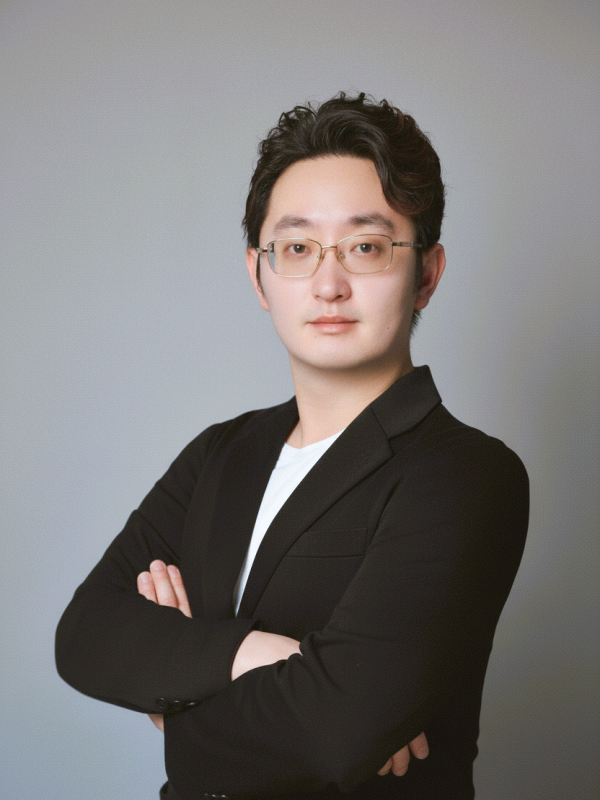 Lixiang Yan, China
Tsinghua University
Interest in Learning Analytics (Research Area, etc.) & Interest in serving on the SoLAR Executive Committee:
My research interest in Learning Analytics lies in advancing theory-driven, human-centred analytics that can meaningfully support learning, teaching, and decision-making in complex educational settings. I work at the intersection of learning sciences, multimodal learning analytics, and generative AI, with a particular focus on collaborative learning, embodied interaction, and the responsible integration of AI agents into learning environments. My work combines large-scale multimodal data, experimental designs, and design-based research to understand how learning unfolds across cognitive, social, and affective dimensions, and how analytics and AI can scaffold learning without undermining agency, equity, or trust.
I am strongly motivated to serve on the SoLAR Executive Committee to contribute to the strategic development of the learning analytics community during a period of rapid technological and societal change. Through my roles as guest editor for BJET and the Journal of Learning Analytics, LAK workshop organiser, and invited speaker for SoLAR events, I have actively supported community building, scholarly quality, and early-career researcher development. As a committee member, I would aim to strengthen SoLAR’s leadership in responsible AI, expand global and interdisciplinary engagement, and support initiatives that translate learning analytics research into impactful educational practice.
Biography: Dr. Lixiang Yan is an Assistant Professor at the Institute for Artificial Intelligence in Education, Tsinghua University. He specializes in the intersecting fields of Artificial Intelligence, Educational Technology, and Learning Analytics, with a research focus on the deep integration of cutting-edge technology and human learning processes. In recognition of his innovative work in multimodal learning analytics and the application of generative AI, he has been selected for the National High-Level Young Talent Program. Dr. Yan’s research is centered on two core contribution areas: first, he pioneers the application of Multimodal Learning Analytics in complex collaborative learning environments to reveal deep-seated behavioral patterns and interaction mechanisms; second, he conducts systematic and forward-looking explorations into the potential and challenges of generative AI in education. His scholarly work has been published in top-tier journals such as Nature Human Behaviour, Nature Reviews Psychology, Computers & Education, and the British Journal of Educational Technology, exerting a broad and positive impact on the academic community.
Working Group Interests: Special Interest Groups Working Group, Learning Analytics - Asia, Multimodal Learning Analytics Across Spaces (CrossMMLA SIG)
STUDENT MEMBER NOMINEES
 Conrad Borchers, USA
Carnegie Mellon University
Interest in Learning Analytics (Research Area, etc.) & Interest in serving on the SoLAR Executive Committee:
Interest in Learning Analytics:
My work in learning analytics is grounded in long-term partnerships with practice. I have designed and deployed goal-setting and persistence analytics serving over 1,500 learners across multiple middle schools, working closely with teachers and administrators to ensure that analytics are compatible with real classroom constraints. My research focuses on analytics that help learners reflect, calibrate effort, set goals, and persist, especially when expectations about workload are misaligned with actual curricular demands. I am leading an industry partnership with Curriculum Associates, where I am co-developing goal analytics to scale evidence-based motivational supports across widely used mathematics platforms.
Interest in Serving:
I am eager to serve as a SoLAR Executive Committee student member to contribute to community-building and early-career advocacy. I have been an active participant at LAK since 2023 and have served on IAIED Society committees, focusing on supporting early-career researchers. I would be especially motivated to strengthen pathways for early-career scholars, support SIG engagement, and help SoLAR members navigate and build productive industry partnerships. Broadening participation and visibility for emerging researchers, particularly through events, SIGs, and initiatives such as the Festival of Learning, is an area where I would be excited to contribute sustained effort.
Biography: Conrad Borchers is a PhD candidate in the Human-Computer Interaction Institute at Carnegie Mellon University's School of Computer Science, advised by Vincent Aleven and Ken Koedinger. His research examines how learning analytics and human-centered AI can support learner persistence, self-regulation, and informed educational decision-making. He designs and studies AI-supported goal setting, feedback, and effort-sensitive analytics in K-12 learning contexts, with adaptive systems deployed in partnership with teachers and schools and reaching nearly 1,500 middle school students. His work also includes data-informed course selection in higher education and methodological contributions to analyzing learner regulation through behavioral and conversational data using machine learning, data mining, and natural language processing. His research has received six best paper awards and a Siebel Scholarship. Conrad holds an MSc in Social Data Science from the University of Oxford, where his thesis earned the OII Thesis Prize, and a BSc in Psychology from the University of Tübingen.
Working Group Interests: Special Interest Groups Working Group, Industry & Partnerships Working Group
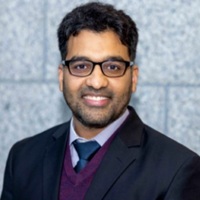 Kamran Mir, Ireland
Technological University Dublin
Interest in Learning Analytics (Research Area, etc.) & Interest in serving on the SoLAR Executive Committee: My primary research interests include Learning Analytics (LA) at scale, Spatial Learning Analytics, and the integration of WebXR with Generative AI to enhance student engagement. I am particularly interested in how spatial data and immersive environments can provide deeper insights into learner behavior in distance education.
Having experienced the value of the SoLAR community firsthand as a volunteer at LAK25, I am eager to contribute to the Executive Committee as a Student Member. I bring a unique perspective that bridges technical implementation (LMS management for 1M+ users) with academic research. My experience as a student representative for the ICDE has prepared me to effectively advocate for the needs of doctoral students within SoLAR. I am committed to fostering inclusive, global perspectives in LA and helping the society bridge the gap between emerging immersive technologies and data-driven pedagogical insights.
Biography: Kamran Mir is an Education Technology Researcher and PhD scholar at TU Dublin, specializing in WebXR immersive learning and learning analytics for distance education. He currently serves as a Research Assistant for the GroSafe project, developing educational games and online training modules. With over a decade of experience as Assistant Director IT at Allama Iqbal Open University, Kamran led the LMS team supporting one million students, managing learning analytics at a massive scale. He is a highly active member of the international academic community, serving as the Student Representative on the ICDE GDC Advisory Board and holding fellowships in Türkiye, Malaysia, and the Philippines. He is also an active participant of EATEL summer schools and ECTEL. His contributions have been recognized with four international awards from the Asian Association of Open Universities (AAOU), including a Gold Medal for innovation. Recently, he was ranked #1 on the Whova leaderboard at the LAK25 conference in Dublin, reflecting his deep engagement with the learning analytics community.
Working Group Interests:
1. Inclusion Working Group
I have a proven track record of international collaboration, having held research fellowships in Türkiye, Malaysia, the Philippines, and China. Currently residing in Ireland and having strong connections in Asia. My role as the GDC Advisory Board Student Representative for the ICDE demonstrates your commitment to representing a global doctoral student body. I can contribute to how SoLAR supports researchers from diverse institutional backgrounds, particularly in Asia and the Global South, where I have significant experience.
2. Education Working Group
I have conducted more than 100 EdTech trainings for teachers and staff and being a Certified Prezi Educator Trainer. My experience in teaching ICT and OER for over 5 years in online and blended models provides a strong pedagogical foundation. I could help chair or develop initiatives that bridge the gap between complex learning analytics research and practical training for educators.
3. Special Interest Groups Working Group
I am already deeply embedded in multiple professional networks, including ICDE, EATEL, AECT, AAOU and the former Moodle User Association. I am well-positioned to act as a liaison between SoLAR and other international distance education bodies (like ICDE) to promote interdisciplinary research in learning analytics at scale.
4. Communication and 5. Website working group are also very relevant to my interest and experience
 Jianjun Xiao, China
Beijing Normal University
Interest in Learning Analytics (Research Area, etc.) & Interest in serving on the SoLAR Executive Committee:
My interest in learning analytics lies in understanding learning as a dynamic, relational, and socio-technical process. Rather than focusing solely on outcomes or isolated behaviors, my research uses learning analytics to model interaction trajectories, role differentiation, and knowledge production within complex learning ecosystems. I am particularly interested in combining network-based approaches and explainable AI to generate insights that are both analytically robust and pedagogically interpretable.
I am also increasingly engaged in learning analytics research involving human–AI collaboration, especially the role of LLMs in shaping participation, feedback, and knowledge construction in open learning environments. I view learning analytics as a critical bridge between theory, data, and system design.
I am interested in serving on the SoLAR Executive Committee because I value SoLAR’s commitment to methodological rigor, openness, and community building. As an early-career researcher with experience in interdisciplinary collaboration, platform development, and open-source initiatives, I hope to contribute to SoLAR’s activities by supporting emerging scholars, promoting responsible and transparent analytics practices, and fostering dialogue between research and practice across diverse learning contexts.
Biography:
I am a PhD candidate in Internet Education at the Research Center for Distance Education, Beijing Normal University, supervised by Professor Li Chen. My research focuses on learning processes in online learning environments, with particular attention to the emergence of learner roles and knowledge ecosystems. Methodologically, I integrate learning analytics, complex network modeling, and explainable artificial intelligence to examine how interaction dynamics and social media affordances shape learning behaviors and knowledge creation.
Since 2019, I have been deeply involved in the design and development of cMOOC learning platforms in China, translating research-driven models into operational systems and data infrastructures. My work has been published in several SSCI Q1 journals. In parallel, I actively develop and maintain open-source analytical tools for educational discourse and interaction analysis, which have been widely adopted by researchers.
Beyond research, I regularly participate in academic exchanges and contribute to the scholarly community as an editorial board member and reviewer for multiple international journals. My long-term goal is to advance theoretically grounded and methodologically rigorous learning analytics research that meaningfully informs educational practice.
For more information about me, please see my personal website: xiaojianjun.cn.
Working Group Interests: Website Working Group
Voting Information: All SoLAR individual and students members are eligible to vote for all positions. Links to access the online voting system will be sent to SoLAR members through SurveyMonkey via email starting on January 16, 2026 (Eastern Time). Voting will end on January 30 at 11:59pm Eastern. All members who join SoLAR by January 27, 2026 will be eligible to vote and will receive a ballot after successfully joining SoLAR. Any questions, please email solarsocietymgmt@gmail.com.