SoLAR Awards
Beginning in 2023, the Society for Learning Analytics Research began nominating individuals within the Learning Analytics community to recognize the high level of scholarship in the area especially for those emerging scholars working toward the future of Learning Analytics. In addition, the society looked to recognize outstanding community work from SoLAR members who have led the way by way of not only scholarship but service to the society and the learning analytics community as a whole.
These individuals are recognized for their noteworthy research leading to significant knowledge and understanding of learning analytics and the impact of their research on learning analytics application, adoption, and professional development within their respective geographic locations.
Congratulations to our past recipients for their scholarship and thank you for your dedication to our community!
2026 nominations are now open and will close on April 22, 2026 at 11:59pm AOE.
2025 Award Recipients
 Shane Dawson is the Pro Vice Chancellor for the College of Education, Behavioural and Social Sciences and Professor of Learning Analytics at the Adelaide University. Shane's research focuses on topics ranging from creative capacity to social network analysis and the application of learner ICT interaction data to inform and benchmark teaching and learning quality. His current research interests relate to complex systems and academic leadership to aid adoption and application of AI in education.
Shane is a founding executive member of the Society for Learning Analytics Research and past program and conference chair of the International Learning Analytics and Knowledge conference. With the support of many talented colleagues, Shane has been involved in the development of numerous open source software including the Online Video Annotations for Learning (OVAL), OnTask (a personalised learner feedback tool), and SNAPP, a social network visualization tool designed for teaching staff to better understand, identify and evaluate student learning, engagement, academic performance and creative capacity.
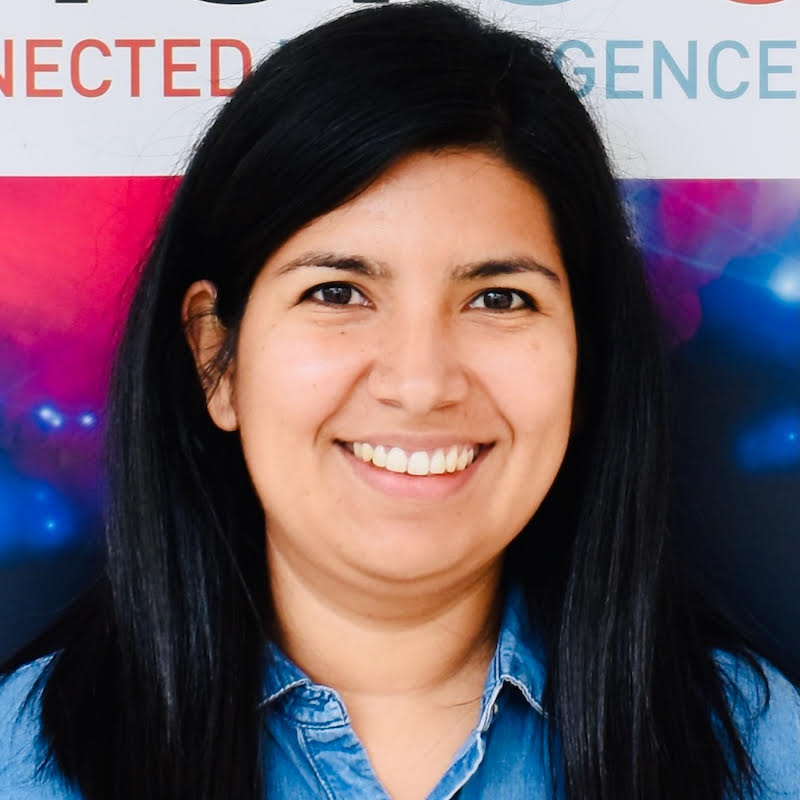 Dr Vanessa Echeverria is a Lecturer in the School of Computing Technologies at RMIT University. Vanessa was a Postdoctoral Research Fellow in the Department of Human-Centred Computing at Monash University (2022 - 2025), where she co-led large-scale studies deploying AI-driven analytics tools in nursing education and simulation-based learning. She served as an Assistant Professor at ESPOL (Ecuador) (2013 - 2022), leading projects in AI, data science, and educational technology. In 2020, she was a Postdoctoral Research Fellow at the Human-Computer Interaction Institute, Carnegie Mellon University (USA), contributing to research on co-designing K-12 interfaces for learning and collaboration.
Vanessa completed her PhD in Learning Analytics at the University of Technology Sydney (2016–2020), where her work on multimodal data-driven feedback systems received recognition, including the Chancellor’s List of Outstanding PhD Theses (Honourable Mention).
Her research has been published in top-tier venues such as Computers & Education, IEEE Transactions on Learning Technologies, ACM CHI, and LAK, and has been recognised with multiple awards, including the 2025 Early Career Researcher Award from the Society for Learning Analytics Research (SoLAR).
 I am an Academy Fellow at University of Eastern Finland, where I have worked since 2022 as a member of the Learning Analytics unit. I obtained my PhD in Engineering at Universidad Politécnica de Madrid (Spain). My research interests are learning analytics, human-AI interactions, and game-based learning in engineering and computer science education, among others. I am skilled in quantitative methods that include process and sequence mining, network analysis, and data visualization, which are proven by over 150 publications in the field of learning analytics and education technology as well as workplace achievements. I have been awarded the SoLAR Emerging Scholar Award for the Europe region in 2025 and the IEEE TCLT Early Career Researcher Award in Learning Technologies (2024).
I am an editor and author of the first methodological book on learning analytics "Learning Analytics Methods and Tutorials: A practical guide using R", which has been made available as open access to facilitate newcomers to the field get acquainted with state-of-the-art quantitative methods. I have developed novel methods in the field of learning analytics such as VaSSTra, for the analysis of intensive longitudinal data from a person-centered perspective, and Transition Network Analysis, a method that combines stochastic process mining with network analysis. I am the PI of the CRETIC project funded by the Research Council of Finland, aimed at optimizing clinical reasoning in time-critical scenarios using multimodal learning analytics and gamified virtual patients. I have developed the first platform for the creation of educational escape rooms (Escapp), available as open source software, which is used by several international educational institutions for students to acquire hard and soft skills. I have published several other open source software projects for teaching, research, and professional use. For example, checkout the new R package tna (for Transition Network Analysis).
2024 Award Recipients

Dr. Antonette Shibani is a Senior Lecturer at TransDisciplinary School (TD School), an award-winning educator and emerging research leader in AI in Education. She has a background in computer science engineering and teaches in the Master of Data Science and Innovation program. Her work spans learning analytics, automated feedback tools on writing, generative Artificial Intelligence (GenAI) for teaching and learning, the ethical and responsible use of AI and large language models, AI literacy, and inclusive education.
Shibani has a strong research profile and has served as a program committee member and reviewer for a number of conferences and peer-reviewed journals. She was an executive committee member of the Society for Learning Analytics Research (SoLAR) and co-hosted the podcast series ‘SoLAR Spotlight: Conversations on Learning Analytics’. She founded the Special Interest Group on Writing Analytics and co-edited the open-access book 'Digital Writing Technologies in Higher Education'. She also co-edited a Special Section on Generative AI and Learning Analytics and is an editorial board member for the Journal of Learning Analytics. With a wide authorship network of over 100+ international collaborators, she has won several merits for her impactful research and engagement (See Service and Leadership).
Shibani is committed to promoting gender and cultural diversity, particularly in emerging technologies such as AI. Her teaching incorporates ethical thinking among AI developers to foster responsible innovation, ensuring that AI technologies are developed with a focus on fairness, transparency, and societal well-being. Shibani was interviewed for the ABC article on AI’s biases in text-to-image generation (2023) and her contributions to the Inquiry into the Digital Transformation of Workplaces submission were referenced in the Future of Work Report, Australia (2025). Her detailed profile is published at https://antonetteshibani.com/.

Dr. Antonette Shibani is a Senior Lecturer at TransDisciplinary School (TD School), an award-winning educator and emerging research leader in AI in Education. She has a background in computer science engineering and teaches in the Master of Data Science and Innovation program. Her work spans learning analytics, automated feedback tools on writing, generative Artificial Intelligence (GenAI) for teaching and learning, the ethical and responsible use of AI and large language models, AI literacy, and inclusive education.
Shibani has a strong research profile and has served as a program committee member and reviewer for a number of conferences and peer-reviewed journals. She was an executive committee member of the Society for Learning Analytics Research (SoLAR) and co-hosted the podcast series ‘SoLAR Spotlight: Conversations on Learning Analytics’. She founded the Special Interest Group on Writing Analytics and co-edited the open-access book 'Digital Writing Technologies in Higher Education'. She also co-edited a Special Section on Generative AI and Learning Analytics and is an editorial board member for the Journal of Learning Analytics. With a wide authorship network of over 100+ international collaborators, she has won several merits for her impactful research and engagement (See Service and Leadership).
Shibani is committed to promoting gender and cultural diversity, particularly in emerging technologies such as AI. Her teaching incorporates ethical thinking among AI developers to foster responsible innovation, ensuring that AI technologies are developed with a focus on fairness, transparency, and societal well-being. Shibani was interviewed for the ABC article on AI’s biases in text-to-image generation (2023) and her contributions to the Inquiry into the Digital Transformation of Workplaces submission were referenced in the Future of Work Report, Australia (2025). Her detailed profile is published at https://antonetteshibani.com/.
 Dr. Namrata Srivastava is a Research and Development Scientist at the Institute for Software Integrated Systems (ISIS), Vanderbilt University, where she works on human-centered AI and multimodal learning analytics to enhance equitable and responsive teaching and learning in STEM+C classrooms. Her research focuses on understanding students’ inquiry processes, collaboration, and learning performance through multimodal data such as eye-tracking, dialogues, and interaction logs. Prior to this, she was a Postdoctoral Researcher at the University of Pennsylvania’s Penn Center for Learning Analytics, developing AI-based detectors of student engagement (e.g., boredom, confusion). She also serves as Adjunct Research Fellow at Monash University, Australia investigating self-regulated learning and engagement in digital learning environments.
Dr. Srivastava earned her Ph.D. in Computer Science from the University of Melbourne, where she pioneered research on sensor-based learning analytics to detect cognitive load using non-invasive physiological sensors. Her work has contributed to major international projects such as NSF EngageAI, SPICE, and FLoRA, and collaborations with institutions like Stanford University, Adobe Research, and TU Delft. A recipient of the 2024 Emerging Scholar Award from the Society for Learning Analytics Research (SoLAR), her interdisciplinary research bridges AI, HCI, and Data Science to design intelligent systems that foster more effective, inclusive, and data-informed education.
2023 Emerging Scholars
 Dr. Renzhe Yu is an Assistant Professor of Learning Analytics / Educational Data Mining at Teachers College, Columbia University, a Research Affiliate at Community College Research Center, and a Faculty Member of Data Science Institute. He received his doctorate from UC Irvine and a master’s degree and two bachelor’s degrees from Peking University. These degrees span education, public policy, computer science, and economics.
His research interests include learning analytics, higher education, applied data science, computational social science, and responsible AI. At the core of his research agenda is equity-oriented educational data science, which investigates how emerging data science techniques can help understand and improve educational and social equity. He has won best paper awards at international conferences on education and data science and received Data Science for Social Good fellowships from the Alan Turing Institute and IBM Research. He was also named David P. Gardner Fellow at UC Berkeley and Public Impact Fellow at UC Irvine.
You can find out more about his research here and view a full list of publications here.
 Mohammed Saqr is an Academy of Finland researcher who leads the lab of learning analytics at University of Eastern Finland, School of Computing which was, according to Scopus, Europe’s most productive learning analytics lab during the last five years (2019-2023) according to Scopus. Mohammed had a PhD in learning analytics from Stockholm University, Sweden, before joining UEF in Finland, Mohammed had a postdoc at University of Paris, France, and holds the title of Docent in learning analytics from the University of Oulu, Finland. Mohammed’s research is interdisciplinary including learning analytics, AI, big data, network science, science of science and medicine. Mohammed has several awards, e.g., the PhD was awarded the best thesis, he also got several international research awards (e.g., best papers), obtained the University of Michigan Office of Academic Innovation fellowship. In 2023, the Society of Learning Analytics Research (SOLAR) awarded Mohammed Europe Emerging Scholar Award for the "noteworthy research leading to significant knowledge and understanding of learning analytics and the impact of research on learning analytics application, adoption, and professional development in Europe. Mohammed obtained funding from prestigious institutions: Academy of Finland (as PI) for Idiographic learning analytic and Swedish Research Council (as Co-PI) as well as several other grants. Mohammed is on the editorial board of several prestigious academic journals e.g., Transactions of Learning Technologies, British journal of Education Technologies and Plos One. Mohammed also organised and contributed to several international conferences and presented several invited keynotes. Mohammed’s current collaboration network includes Finland, Spain, Sweden, Germany, Serbia,Australia, France, Switzerland, UK, and USA and The Netherlands.
To find out more about Mohammad, please visit his website: https://saqr.me/
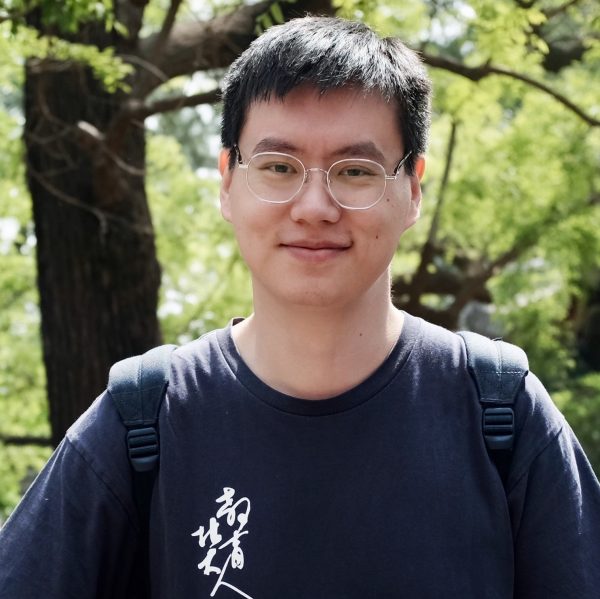 Yizhou Fan is an Assistant Professor and Research Fellow at the Graduate School of Education, Peking University since February 2023, and before that, he was a Postdoctoral Research Fellow at the University of Edinburgh. He is also an adjunct researcher at the Centre for Learning Analytics Monash, Monash University. Yizhou considers himself a learning analyst using computational methods to advance the understanding of online learning strategies and self-regulated learning. His research interests are MOOC, self-regulated learning, learning design, learning tactics and strategies, and multimodal learning analytics. His recent research agenda lies in the development of personalised metacognitive scaffoldings to assist learners in better cooperating with artificial intelligence (such as ChatGPT) to learn and complete challenging tasks. In the past five years, he has published more than a dozen articles in top-tier and peer-reviewed international journals (e.g., Computers & Education, Metacognition and Learning, and Journal of Computer Assisted Learning) and conference proceedings such as the International Conference on Learning Analytics and Knowledge (LAK). Yizhou has been strongly embedded into the international research community through his service role on the Communication Committee of the Society for Learning Analytics Research (SoLAR) and as the Publicity Chair for LAK22 and ECTEL22. He has also received several rewards such as Excellent Dissertation Award for Educational Research in China (2019), National Excellent MOOC Award in China (2017, 2019) and Emerging Scholar Award (2023).
2026 SoLAR Awards - Applications Now Open. Due April 22, 2026 at 11:59pm AOE
Once again, SoLAR is calling for nominations for two award categories by region - Emerging Scholars and Outstanding Community Work!
Outstanding Community Work:
The SoLAR Awards Committee is calling for nominations for outstanding community work in the field of learning analytics. People can nominate themselves or nominate others. We are specifically looking for nominations covering different regions of the world, i.e. Australasia, Asia, Africa, Europe, North America, and South America.
What do we mean by “outstanding community work”? Below are the eligibility criteria to be nominated for this award. Please note that while only 1 is required, please describe all that apply within the nomination:
-
Engagement with researchers and/or practitioners to train or disseminate initiatives in the area of learning analytics
-
Support the dissemination of ideas in the field to multiple stakeholders
-
Engagement as a volunteer in community-based learning or research activities
-
Outreach activities to connect learning analytics with other communities
-
Foster exchange of knowledge around learning analytics with multiple groups
Decision process:
-
The decision on who will be awarded will be taken by the SoLAR Awards Committee
-
The winners will be announced during LAK26 at the SoLAR Annual General Meeting on Thursday, April 30, 2026.
-
If there aren’t any nominees for one of the geographical regions, no award will be given for that region
-
If there is only one nominee for a geographical region, then this person will not automatically win (e.g. due to the eligibility criteria not being met)
Emerging Scholar:
The SoLAR Awards Committee is calling for nominations for emerging scholars who are doing excellent research in the field of learning analytics. People can nominate themselves or others. We are specifically looking for nominations covering different regions of the world, i.e. Australasia, Asia, Africa, Europe, North America, and South America.
What do we mean by “emerging scholar”? Here are the eligibility criteria to be nominated for this award:
- Obtained a PhD or equivalent doctoral degree within the past 5 years (or equivalent if there have been career interruptions)
AND
- Emerging noteworthy research leading to significant knowledge and understanding of learning analytics
OR
- Evidence of impact of nominee’s research on learning analytics application, adoption, or professional development
Decision process:
-
The decision on who will be awarded will be taken by the SoLAR Awards Committee
-
The winners will be announced during LAK26 at the SoLAR Annual General Meeting on Thursday, April 30, 2026.
-
If there aren’t any nominees for one of the geographical regions, no award will be given for that region
-
If there is only one nominee for a geographical region, then this person may not automatically win as the eligibility criteria must be met)